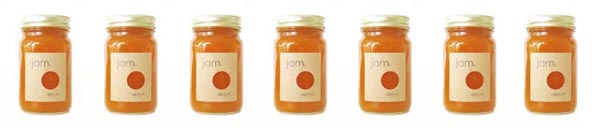
Yes, this surely is a sensational headline. If there were an equivalent food publication to the Star or National Enquirer, this little ditty would be right at home.
When we made about 100 jars of jam from a backyard tree it made perfect sense. I mean, we had more apricots than we could eat or bake, so why not pick them off the tree, wash them, pit them and toss them in a pot with some sugar, cook them up and add them to clean jars? Sounds pretty easy and it is. On a small scale.
So what is the dirty secret? Frozen fruit.
In the years since we turned a backyard summer hobby into a full-time business we have learned a lot about food manufacturing and it isn’t very pretty.
When we transitioned from making jam for friends and family to trying to meet demand from customers, we did only what we knew how to do. We made more. Instead of 100 lbs of apricots from our tree, we would buy from a local orchard 6000 lbs and do the exact same thing. We would wash the fresh fruit, pit it and toss it in a pot with sugar, cook and can it. But the massive jump in the number of apricots and jars created extreme stress. Fresh fruit, we all know, only lasts so long in a refrigerator, and Blenheim apricots last about 3 weeks if you are lucky. What that means is we have about a month at most to make all the jam we can for the entire year.
For us, who don’t have the funds to pay legions of minimum wage employees to do the work for us as we sit beside the pool at some far flung vacation home, or even in an office, we do all the work ourselves and get some friends and family to help. And quite honestly, we would never have it otherwise. There is a zen in simple things and making jam for us is a blast now that the initial growing pains have subsided. Every tiny detail makes a tremendous difference. It is like saying if you kill that butterfly something bad will happen 20 years from now. Well for us, how we make our jam is an intense passion that we hate to admit, we could never trust anyone else to do as well.
So here comes the ton of bricks. Since we have learned from every mistake imaginable how to run a food business, we have also learned jam making around the world is virtually and exclusively from frozen fruit. And it makes perfect sense. Why limit yourself to a few weeks to make a product that has to last you all year? Twinkies are made every day of the year all year round. So is Wonder Bread, and probably most stuff you buy in the grocery store – even gourmet things. In in the jam word, it is always made from frozen fruit so they can make jam 7 days a week 365 days a year to supply global demand.
On top of that many people don’t actually make the jam themselves, let alone other food brands. They rely on copackers – companies that specialize in making a certain type of food. All you do is give them your recipe and they take care of everything. We know some local jam makers who rely on copackers. But as we said, we don’t trust anyone to do it as well as we do. That is why we took the leap to build our own small manufacturing facility so we have complete control. Sure it cost a fortune and we have been broke ever since, but in the long run it is worth it, just like owning your own house in the long run is better than renting.
But face it. Businesses have to grow. And to grow you have to sell more product each year. And if you happen to be a jam maker you are extremely limited in growth if you can only work a few weeks out of the year no matter how many employees you can hire, or fancy machines to automate hand work.
So you see we entered a business we had no idea had a frozen ceiling. To make big bucks you need to transition from home made style jam making in a short period of time using fresh fruit to frozen fruit that can be thawed and cooked into jam virtually 365 days a year.
But there is a huge difference between fresh and frozen as we all know. How many of you eat frozen food each day? And how many of you think frozen fruit, vegetables and prepared food tastes as good as fresh? Not many I am willing to bet.
The coin toss for any budding business owner is whether to stay true to flavor or stay true to growth and profits. We are contrarians. We believe there are people who are willing to pay more than bottom dollar to avoid eating garbage. How many times did you rave about a frozen dinner? Sure it is cheap and easy. But in the scheme of pleasure, and health, freshly prepared ingredients taste better, and maybe we are idealists, but they make for a better life.
We have learned from experience that quality of life in the long run is better than shortcuts just to make a quick profit. Quality has a pace of its own and has far richer rewards in more ways than one. The cheap way out will never produce rich results.
Some of our local jam makers have confessed to us they use frozen fruit. It is so much cheaper, so much easier they say and it tastes the same. They don’t have to stress out making everything over a small amount of time and spending tons of money up front to buy all their yearly supplies (jars, labels, sugar, fruit etc. add up to a monthly cost of around $20,000).
Even some farmers have said we should freeze the fruit but we haven’t even done a test. As experienced food experimenters and cooks, we know already there is no mistaking the elegance and transient sensation of fresh over dulled frozen. Whoever thinks frozen is just as good as fresh have no good sense of taste or they are deluding themselves that the easier way out tastes better to them.
The people who started Smuckers jam probably like us started in a home kitchen and used fresh fruit. Somewhere along the way it transitioned to frozen fruit and rock bottom prices that would entice anyone to buy it no matter how poor they might be.
We don’t make any excuses. Our stuff is expensive. And it costs us a fortune to make it every summer. In fact, the cost essentially ruins us for the entire year. Yes, any MBA grad would say that is a mistake. On paper it probably is, but on your tongue it will make you swoon. A blind taste test will make us come out first anytime over frozen stuff.
We all know a hamburger on a backyard grill made by a friend tastes better than any McDonalds burger. And we know the birthday cake made by your mom tastes better than anything you can buy for $9.95 at Costco or the supermarket. Why? Because the ingredients in mass manufactured food are the worst tasting, least healthy, cheapest garbage. For big companies profits come first, taste second.
They say James Joyce would spend an entire day to write a few hundred words until he was satisfied. The world is divided between those who understand this and to whom it makes no sense.
Anyhow, for what it is worth, we will never use frozen fruit, and our jam will always be made by us. Nothing will change. Our stuff is the closest to home made that you will ever buy. Yes, we are fools to some, but we have our standards and they set the bar for everything else.
Veering off the course of writing about running this crazy business, we wanted to share with you two products we simply love. For those of you with nut allergies, we feel bad about this, but as a nut-free food business, we feel we can share with you our nutty obsessions.
First is a Spanish dark chocolate with Marcona almonds from Valor.

Eric isn’t a big fan of dark chocolate (yes, that is so against the grain these days!) and his Swiss father definitely doesn’t like dark chocolate, but both can’t stop eating this stuff. You can find it at some grocery stores or you can get it online at Chocosphere.
Second, is Hubs Virgina Salted Peanuts.

Now, we love peanut butter, but when our neighbor gave us a tin of these this morning they blew our minds. First they are super crunchy, they are huge and the flavor is out of this world! “You never have had peanuts like this,” is what our neighbor told us and we agree. We asked the company if they ever considered offering some organic peanuts and this is what they told us: “We don’t offer organic peanuts because the organic peanuts supply in the United States is too miniscule to offer a consistent product supply.” We think some peanut farmers need to start growing more organic! You can buy a can or two at the Hubs site.
I am still recovering from a bad cold and cannot do any demos so I figured to conduct a little experiment in San Francisco grocery stores. How many, I wondered, actually sell products made in San Francisco, or at least the SF Bay Area? Of course to make it easy, I selected the jam section for investigation. There are five jam companies including us here in the SF Bay Area that should be in all stores.
From personal experience we know the stores that emphasize local products and they are the independent ones, along with one national chain – Whole Foods. But for my experiment today, I visited only companies with at least 4 stores to see what they sell and here are my results.
1. Safeway
They are headquartered in Pleasanton, CA, in Alameda County and about 50 miles away from San Francisco. They are a very large company and are publicly traded with the ticker SWY. The store I visited was two blocks from my house and where we shop for basic necessities. They have a sign the store is 100 percent wind powered and they carry a lot of their own organic products under the O label. The organic jams under the O label were made in Canada.

This means they were co-packed. Co-packing is a term when companies hire other companies that specialize in making a certain type of food to make a product for them, which they can put their own label on. Many co-packers in the jam business make jam for big supermarkets. Essentially it is the same jam but with a different label. Sometimes they change the formula a little to make it taste a little different. Why use co-packers? For a company like Safeway, they are in the business of selling and not manufacturing. All private label products are outsourced or co-packed so they don’t have to build a factory for making that specific product. For a big store we applaud them for being more progressive than others in their category such as Lucky’s. They are also the first big national, traditional grocery chain to get into the organic act and each month we see new organic products on the shelves. But the fact that their organic products are produced in another country does not reflect well when California produces amazing organic fruit and has companies that can co-pack here in the state. Bottom line? It must be cheaper. But CA jobs and farmers are losing out.
In terms of local jam they failed the test. No local companies were on the shelf, and out of a dizzying array of jams only two brands were made in California.

Both used conventional fruit and both had corn syrup in them: King Kelly and Dickinson’s (call themselves “gourmet” but uses high fructose corn syrup).
2. Andronico’s
They are headquartered in Albany, CA in Alameda County which about 20 miles from San Francisco. They have eight stores in the Bay Area and are privately owned. About 20 years ago this was the gourmet store in the Bay Area known for having the best products and being the most expensive. Since then they have been eclipsed by Whole Foods and are less “classy” and are more in the league of Safeway. They still have high prices and a faint aura of quality.
I was surprised by my visit to the store in San Francisco where we shop now and then. Over the years they never sold any local jam, and repeatedly have rejected selling our jam or bbq sauce. Why? In the old fashioned grocery world the thinking goes the more flavors you have of a product, or SKUs, the more shelf space your brand will occupy and the more likely shoppers will notice and buy the product. We were rejected since we just have one flavor of jam, apricot, and one flavor of bbq sauce that are available for wholesale.

On my visit today to the only San Francisco store on Irving Street, I was surprised to see one San Francisco jam company, CMB Sweets, and then Frog Hollow from Brentwood, CA – about 70 miles east of San Francisco. Hats off to Andronicos for bringing in local companies to the jam section. However, following the multiple SKU logic, both CMB and Frog Hollow had many different flavors on the shelf.
I have a big problem with the multiple SKU logic. First and foremost, it forces companies to make more product to get into a store. This means for someone who specializes in doing one thing well, they cannot gain entry. Quality is never important compared to quantity. In our minds this logic essentially requires companies to use more natural resources to make more products then they normally would and is wasteful from an environmental standpoint. This thinking is endemic in the business world. From car manufacturers to food to cleaning products to clothing, offering as many choices as possible is a ploy to snag customers. The thinking dominates how business is done and focuses on mass production over quality, niche products.
3. Lucky’s
Owned by SaveMart which is headquartered in Modesto, CA. The original Lucky company was founded in 1931, headquartered in San Leandro, CA and was a Bay Area institution. It has gone through several ownership changes, including the name change to Alberstons, and now back again to Lucky or Lucky’s. This is a no-frills supermarket the kind we remember as kids that focuses on huge discounts and national brands. It is very old school and stuck in a traditional, out-of-date supermarket mindset. We never set foot in these stores.
So I wasn’t surprised by what I found in the store on Masonic Street. There were no San Francisco or SF Bay Area brands of jam being sold. There were two brands made in California: King Kelly and Dickerson (that are also sold in Safeway). Most of the brands contained high fructose corn syrup, some with it being the primary ingredient such as this orange marmalade by Super Store Industries.

Almost every item on the shelves of this store has signs of the price being reduced and there is a huge wall of the current discounts.

Quality means nothing. It is all about how cheap you can sell something, which means the brands they sell are manufactured for pennies with the cheapest ingredients possible. As consumers, this is terrific since you can stock up and save a lot of money. But what do you get for your money? Scanning the products and the ingredients revealed things no one has on the spice rack in their home. Preservatives, high fructose corn syrup, artificial flavorings and colors. You know the score. Save money but risk your health eating the products.
4. Molly Stone’s
Headquartered in Mill Valley, CA – which is Marin for those of you who aren’t familiar with California. Privately owned with eight stores in the Bay Area. They have two stores in San Francisco. Molly Stone’s is very similar to Andronico’s but is more upscale and has better products in our opinion. They are pricey and attract a more upscale customer.
And they failed the jam test. No San Francisco or SF Bay jam brands were on the shelves. There were four brands made in California, none being organic.

Of course we knew this. Like Andronico’s they have rejected selling our products for the same reason as not having more than one SKU. However, this logic is not consistent. They do stock a few single SKU jams, but they are made in either England or out of state. A local company that doesn’t buy local products. Hmmm. Why is that?
5. Trader Joe’s
Headquartered in Monrovia, CA and privately held, this company has around 340 stores and half are in California. For many years there was one store in SOMA area of SF and a new store opened in Stonestown Mall. This is the store I visited. Of course the second I walk in the store I hear “Mr. Haeberli?” and it is one of my former students. We chat a bit and get caught up. Her dad works at Rainbow Grocery, one of the best health food stores in the area that sells mostly local products, including ours.
Trader Joe’s not surprisingly failed the test. Most products are their own private label in the jam section.

The organic ones are made in Canada, just like Safeway’s. It is highly likely both stores have the jam co-packed by the same third party company in Canada. The non-organic Trader Joe’s jam did not state where it was made but just had the address of the company in Monrovia. Probably also made in the same factory in Canada. There were two other brands, each made in the UK. For a US company, with two stores in San Francisco, why are all the jams made in other countries? It is cheap. And Trader Joe’s, like Lucky, is all about bargains first and foremost.
6. Whole Foods
Headquartered in Austin, TX, Whole Foods is a public company with the ticker WFMI and with around 270 stores world wide.
I visited the Noe Valley store which is down the street from where we live. I know of course they sell our jam and our bbq sauce. But how many other local jams do they sell? Two companies from San Francisco were on the shelf: welovejam and CMB Sweets. Six other companies made in California, and within 100 miles were also on the shelf. In the photo below you can see six. On the shelf to the left were two other brands I couldn’t fit into the frame.

Whole Foods is distinctly different in how they do business from other big grocery companies like Safeway, Lucky and Trader Joe’s. Whole Foods gives individual stores buying power and encourages them to buy the majority of their products from local producers and farms. This is a Whole Foods philosophy carried out nationwide. In fact, Whole Foods is the first company that approached us to be in their stores back in 2008 after they discovered us at Slow Food Nation where they were corporate sponsors.
The one beef we have with Whole Foods is they put our apricot jam on the top shelf and out of reach to most people.

Of course, like the wine department, top shelf products are the most expensive in some departments of stores, and we are pricey at $9.99. But for a local company to be physically out of reach unless you are at least 5′9″ tall we are a little sad especially since our sister jam maker is on a lower more accessible shelf. Her jam is almost the same price as the jam you can see to the left our our jars. Someday we hope to move down a shelf. They do make signs for local companies and several stores put them up about our products which is really amazing. For a national company Whole Foods treats us like they are a small independent San Francisco store. That is quite flattering compared to what we have seen on the shelves of all the other chain stores in San Francisco.
Obviously the winner among companies with more than four stores that sells the most local jam is Whole Foods. We also know this is reflected in their other departments. The advantage is customers can support local businesses, many who are small and starting out. The downside is small companies have to price things higher in the early years and customers in Whole Foods usually have to pay more for these products. Whole Foods also has a wide selection of co-packed products that are more affordable. Some are organic and some are not. They are for people on a budget. Whole Foods therefore can target two different types of customers at the same time.
In ten years more stores will be like Whole Foods. They also probably will be smaller and with a more highly edited selection of products – appealing to the budget conscious and the money-is-no-object-I-want-the-best type of customer. The advantage of this is the same logic car companies use. They have the entry level budget model, and then a progression of more expensive models as your income goes up over the years. It is about building brand loyalty. And if there is another recession, you can always go back to the budget product you used to use. All under one roof.
Like a lot of people who love to cook we are obsessed with cookbooks. Luckily our public libraries are staffed by incredible people who buy amazing books we check out weekly. If we like them we buy them. On the flip side we love collecting vintage cookbooks. They offer insight into past dining habits, ingredients, preparation and most important are a trip back into nostalgia to a time we missed. With that said, we will be posting on a regular basis our new finds and treasures.
Our newest obsession is the cookbook author Beverlee Sias. We got her The chicken cookbook 1969 A.S. Barnes and Co., Inc. Cranbury, New Jersey online for $5. Yes cheap cookbooks a fairly safe addiction. (Note: go for the cheap ones since they will get messed up in the kitchen anyway. Don’t waste your money getting a mint condition first edition for $40 when a perfectly good one is there for $5)

We make a lot of chicken and have even pondered getting a chicken coop for eggs. We have a customer in San Jose who showed us the coop he made and it is quite impressive! Anyhow, this book is loaded with every imaginable recipe to do with chicken. We first made her Chicken in Lime Juice and it was incredible. Unlike many books of the 1960s and earlier she calls for fresh ingredients and was well learned in cooking styles from around the world. We highly recommend you buy this book. Our appreciation for Beverlee has led to a brief investigation to who she is. We know she was born in San Francisco, was half Spanish, and was a wompatrol in the National Ski Patrol System.
This explains her The skier’s cookbook which we also had to buy.

We aren’t too sure if she is still around but would love to know. She apparently lived in Mt. Shasta and had a son who was into ski racing at a young age. The books is full of info on ski maneuvers, working on the slopes and food especially delicious for hungry skiers.

This book evokes images from Après-ski outings of the 1950-1960s when people still had wood skis, and wore the most glamorous attire.
A book from around the same time is Peg Bracken’s The Compleat I Hate to Cook Book 1960 Harcourt, Brace & World, Inc.

Since we love to cook we just had to buy a book with a title like this. Peg is one funny gal. While the recipes are very traditional American fare centered on using as many frozen and canned ingredients (she hates wasting time in the kitchen) many substitutions can be made with fresh. But the copy is hilarious and can be read like a book.
Here is an excerpt from the back of the book:
Some women, it is said, like to cook.
This book is not for them.
This book is for those of us who hate to, have learned, through hard experience, that some activities become no less painful through repetition: childbearing, paying taxes, cooking. This book is for those of us who want to fold our big dishwater hands around a dry Martini instead of a wet flounder, come the end of a long day.
The book turns out to have been a collaboration among friends and has great illustrations by Hilary Knight.

Another fun thing to collect is the publications put out by certain food societies – usually associated with a specific industry. We picked up “Bananas…how to serve them” from The Home Economics Department of the Fruit Dispatch Company, Pier 3 North River, New York, N.Y. 1940 since we love bananas. It is a pamphlet with the most hideous food photographs common at that time, but kooky copy and some appealing recipes like the Banana Pecan Ice Cream – we like the variation with Peanut Brittle in it.

Moving on, another love is historical cookbooks, such as Soup Through the Ages: A Culinary History with Period Recipes by Victoria R. Rumble 2009 McFarland & Company, Inc. Chuck full of archival photographs and recipes, we have yet to tackle anything from the book.

It is also full of great photos like this group of people in a Victory Garden:

There is a downside of surrounding yourself with recipes and books: overload. Some days when we are deciding what to make for lunch or dinner (we almost never eat out which probably explains why we are both so slim) we have simply no excuse to be at a loss what to make. But with so many choices at our fingertips, we sometimes just pick up some organic ground turkey thigh meat and make marinated burgers with a salad. When this happens I always feel so dumb since we could have made something new. But when you are exhausted, falling back on spontaneous creations or standbys is common. We do however, cook from these books just about every day for at least one meal. Doing a lot of cooking from books also shows how few recipes are actually any good. They usually need tweaking.
Another historical book we picked up this week is The City Tavern Cookbook: Recipes from the Birthplace of American Cuisine by Walter Staib with Paul Bauer 2009, Running Press Book Publishers.

This establishment in Philadelphia opened in 1772 and the book is a collection of classic and updated recipes full of interesting historical tidbits. We just got it and haven’t tried anything yet. We are intrigued by Ben Franklin’s beer recipe:

Eric is currently getting close to finishing Appetite City: A Culinary History of New York by William Grimes 2009 North Point Press.

We highly recommend reading this book. The research done by Mr. Grimes is astonishing and the education you will get from reading this book is equal to a semester in college. While it is a big book, and it can progress more slowly than a mystery novel, we suggest you give it a shot. One of the early lessons of the book which is repeated in “The City Tavern” is just how abundant and popular oysters were to early American diners living near sea water. Now Eric loves oysters of any kind and Phineas sticks to them fried, so hearing about all the inventive ways they were prepared simply makes our mouths water.
Speaking of delicious, we have been happy so far with Organic Marin: Recipes from land to table by Tim Porter & Farina Wong Kingsley and produced by Marin Magazine. 2008 Andrews McMeel Publishing, LLC.

We have tried the Vegetables on Quinoa with Miso-Ginger Sauce (pg. 72) and it was fantastic!
OK. That is about half the books we have cracked open in the past week from libraries and online purchases. More to come soon.
This question comes up now and then and when it does I usually have to bite my lip. Why? Because to answer a question like this requires more time than is socially appropriate to expand on such a topic. I do farmers markets on weekends and demos in supermarkets during the week. Easily I can encounter 1000 people a week. Most of the time people taste stuff and if they like it they just buy it. But in these difficult economic times it is perfectly OK for a shopper to pause and say “$10 for jam?”
So considering I am stuck home nursing a cold and am in a grumpy mood what better time than now to address this sticky subject.
I would like to preface this by saying not too long ago I was the average shopper who was mystified by the pricing of products and had no idea about the behind-the-scenes world of food manufacturing and supermarkets. Well, having been thrust into this industry by chance, we have had to learn it inside and out by trial and error.
The easiest way to explain pricing of food is to use an analogy we can all relate to. Our income and our monthly expenses. We all have jobs (usually working for other people) and get a fairly reliable income. Let’s just say that income is $60,000 a year. Then you have your expenses such as rent/mortgage, utilities, credit card payments, food, insurance etc. Let’s say those all add up to around $40,000 a year. That means you have $20,000 left over to do what you like with it. This is how most households work.
Now, all of a sudden let’s say you are sick of the job you have and want to do your own thing. Or maybe you got laid off and can’t find a job. And for lack of better jobs, let’s say you want to be a baker and make bread since that is your passion. You quit your job and announce to friends and family “I am baker.” If you are unemployed you just say “I will become a baker.”
Of course I am making things very simple here. Anyhow, kiss that $60,000 goodbye. Now you have no money and no job. And you still have that $40,000 you need to make every year to survive.
To start any business requires a double set of expenses: your personal and business. In this case, the $40,000 in expenses you have for your personal life will now get doubled for all the expenses of running a business. Doubling things is pretty accurate, but it can be higher. So now your yearly obligations will be around $80,000 in bills.
In the world of food manufacturing it is against the law to make any food for sale in your home. There are many reasons for this but it comes down to public safety. All food manufacturers and food manufacturing facilities must adhere to a dizzying array of laws and regulations about the space the food is prepared in. Special floor surfaces, plumbing, ventilation and all kinds of details that just do not exist in a home kitchen. Then there is the fear of pets sleeping on the kitchen counter, someone smoking in the next room etc. And all food manufacturing spaces must be inspected by either the city or state health departments. (city governs restaurants and state food manufacturing). Inspectors just don’t want to be visiting people’s houses.
Anyhow, as a future baker, you will need a kitchen outside your house and in an area zoned for this use. No, you cannot build it in your garage since this is a residential zoned area. You will need to either find an existing bakery you can rent by the hour now and then, rent one just for yourself or you will have to build one from scratch. In terms of rent, commercial rent is high for two reasons. One, any type of retail rent, say a bakery in the middle of town, is high traffic and therefore expensive. Rent for spaces in industrial areas are high since the square footage for commercial buildings is larger. No matter how you slice it, beyond renting an apartment to live in or a house, you now will have a second rent: your business. Then there is the cost of buying all the equipment from ovens, mixers, tables – the list is huge. Feeling a little nervous about these required financial obligations? You better be!
Unless you have a stash of cash you can tap into, you will need to get loans to pay for all of this. On average to start up a venture like this where you can rent by the hour an existing facility that already has the equipment, the upfront costs aren’t too high. However, in the long term a shared facility won’t allow you to grow. At some point you will need to establish your own space. And the cost for this is at least $150,000. At least. So you need to get a loan. The downside is unless you have a proven track record as a baker, you will not find any bank to give you a loan since in their mind your rate of failure is pretty sure. You have no experience as a baker and why should they trust you. In today’s world the chances of getting any type of loan to start a business is nil. But a few years ago when we started we did. We were lucky.
So, somehow you manage to get a loan (yes the interest rates will be high due to your inexperience), find a space, buy equipment and are ready to roll. Now for us, it took three years to get to the ready to roll on our own aspect. And the heartache, disasters and every other horrible thing that could have gone wrong did. It nearly drove us mad. But we will gloss over this. All the horrors of getting started are behind you and now you can finally bake your bread. We also need to make the distinction between whether your business will be retail or wholesale. Retail is you have your own bakery in a business district and can sell directly to people. Wholesale is you make your bread in a kitchen in some industrial section with no foot traffic and you plan to sell to stores. This is what we did since retail rent is very high. You decide to save money and be a wholesale baker.
This is where the pricing complexities come into play. Suppose you will work 8-hour days six days a week. And in this time you can make 2000 loaves of bread each week. You are working at maximum capacity by yourself. And let’s say your monthly financial obligations for personal and business total $6666 a month ($80,000 divided by 12). How much do you charge for each loaf of bread? Easy. You can make 8000 loaves a month, and to make the $6666, you just need to charge 83 cents a loaf. Sounds pretty cheap huh? You can even raise the price to $3 a loaf and then you will make a profit besides breaking even. But we have to factor in all the ingredients to make the bread you have to buy each week, and the packaging to put it in. All of a sudden when you factor in the ingredients and packaging, on top of your personal and business financial obligations, the cost to make just one loaf of bread jumps up to $3. Now, all of a sudden you are not even making enough money to pay all your bills. You are in the red – short $666. So you recalculate the cost of your bread so you can make a profit. First you tack on 33 cents so now you are breaking even.
But then you realize that breaking even isn’t good enough. Remember you used to make $60,000? You have accounted for the $40,000 but your pricing forgot to allow you the same spending money as before you quit your job, which was $20,000 extra. This paid for emergency repairs to your car, house, buying presents and going out to eat now and then. So you have to factor in your fun money. You do the math and figure out this $20,000 is $1666 a month. So you tack on an extra 83 cents per loaf to make this extra money. I mean you are working an extra day each week compared to your last job so you might as well make the same money right? Now with the 83 extra cents your loaf’s price will be $3.83.
But wait. It gets even worse. Since you are a wholesale baker, and will be selling to stores, there are some additional prices that come into play. For one, since you are so busy baking all the time, you need to hire someone to deliver the bread each day. Companies that act as a go between manufacturers and stores are called distributors. They basically have a huge fleet of trucks and tons of storage space. Grocery stores love distributors since they carry many, many different products, from milk to cheese to meat to bread to fruit and vegetables. For grocery stores that don’t have that much storage other than what is on the isles of the stores, distributors not only allow them to store stuff, but they can order many different things at once and have them delivered on the same day.
So you find a distributor. They usually mark up what they buy from manufacturers 15 percent of the cost of your product for this convenience.
Now your loaf costs $4.28.
So let’s just say the distributor buys all your 8000 loaves each month. Normally when you are a new business demand isn’t that high, and that will send your earnings down into the red. Imagine if you only were selling 4000 loaves a month? You would be in big trouble. You would have to raise your prices even more – say double so the loaf would cost $8.56. But we are being optimistic here. The distributor buys the 8000 loaves you make each month and this is where the sudden leap in pricing takes place.
Grocery stores are expensive businesses to run. They have high utility bills from all the refrigeration, high insurance costs, high labor costs (most employees in grocery stores are in unions). So it is normal practice for stores to mark up anywhere from 30-60 percent. That means, when the distributor delivers your bread to a grocery store, which buys it for the $4.28, if they mark it up 50 percent, the price on the store shelf will be $8.56. And if you had to raise your prices even more, as the scenario where you had to sell the loaf for $8.56, that loaf would then cost an astounding $17.12!
But wait, there are more costs in store! Let’s say that the 8000 loaves just aren’t enough each month. You are always broke and low on money since out of the blue expenses materialize. You decide the only way to make more money is to make more bread. So you decide to get a part time employee to help, and you also decide to sell this extra bread to areas further away. Say the next state over. Now, you have to factor in the cost of the employee into the bread. If you own a business in San Francisco, the minimum wage is almost $10. And say this person works 20 hours a week. So you have to then factor in the cost of an extra $800 a month. Of course this can be offset by making more bread and making more money right?
However, distributors and grocery stores that are further away from where the manufacturer is based want some hands on attention. They want someone to visit the store to see if things are in stock and they want someone to organize demos of your product. The companies that do this are called brokers. Most big distributors and big grocery chains require you to have a distributor before they buy your product. Now, the broker wants to make money too, so all of a sudden you have to raise your price per loaf even more. And then to pay for the demos of your products the going rate is $30 an hour. Factor in at least one demo per day for a month (they are usually three hours long) and you have some big expenses offsetting these extra earnings. Depending on the broker and how many demos you do the cost can skyrocket.
All of a sudden, you realize that your loaf of bread you want to sell to the next state will cost $2 more a loaf. Now it will be $10.56. And that is a pretty pricey loaf of bread and few people will want to buy. Even the loaf for $8.56 is almost double the price of other loafs in the supermarket.
This is when people will say “$10 for a loaf of bread?” and you will have to bit your lip because you have no choice but to charge that much.
Now, there is one other factor that I forgot to mention that also makes starting a business difficult. Everything in the business world is priced on how much you buy. So, when you are buying 50 lb sacks of organic flour, if you just buy a few each week, you pay let’s say $20. But if you were to buy 30 sacks a week you would pay only $10. As a small business owner you pay the maximum price for everything.
And this is where bigger, more established companies have the advantage over you. Your loaf of bread that costs almost $10 is twice the price of another company that sells theirs for $4.40. Both are organic, both tastes great (though you think yours is better of course). The reason the competition can charge less is probably since they have lower costs after paying down their debt over the years and they buy in such massive quantities they pay just a fraction for ingredients compared to you. The price they can sell their loaf to the distributor is only $2.
So can you see why all small businesses are doomed from the start? They have high operating costs and their cost to buy supplies is the most. The only way to survive is to slowly grow so you can lower your prices. The unfortunate fact is only a tiny percentage of small businesses survive.
Next time you see an expensive bottle of olive oil or honey or loaf of bread, instead of saying “Oh my god! This is robbery!” think about what I have said and all the factors that go into making the final price of a product. Nine times out of ten, the most expensive products will be from tiny, newer companies paying top dollar to do business in a world dominated by huge companies with very low costs. These products are usually made by hand with more care than in a big factory, and usually they are worth their price in how delicious they are since in general they use top quality ingredients. And finally, they are directly supporting people crazy enough to start their own business.
I suppose half the thrill of starting your own business is the race against the clock with the odds stacked against you from the start. Race car drivers, speed skaters, and entrepreneurs all love the adrenaline rush associated with risk. That is half the fun.
In a prior posting I talked about how many years ago I contemplated starting an organic fruit infused line of alcohol but abandoned it due to the expense and over regulation by the government. This article is a classic example.
For years bars have been infusing spirits with various flavorings but no one seemed to care. All of a sudden the ABC decides to crack down. And of course it is a bar that is popular and making money. The moral of the story? If you are making any money as a businesses someone wants a piece of the action.
In my experience of researching liquor laws one odd law baffled me. Vodka by definition has to be clear and 40 percent alcohol (80 proof). Since I was infusing the alcohol with fruit and it was changing color from all the beneficial elements in the fruit (and real flavor) by definition it could not be called vodka. That is why I was using a slightly lower percentage spirit called soju which is just like vodka but is diluted with water to around 22 percent (44 proof) and I was going to give it a new name – sojuice. All distilled spirits are super powerful and are usually diluted with water to lower the alcohol percentage. This goes for whiskey, scotch, rum etc. Some scotch is full strength, and of course moonshine is as well.
So this means when you buy a flavored alcohol, such as say a Absolute Mandarin, or Skyy Pineapple, they are always clear. Now think about it. If there were real fruit in the alcohol would it be clear? Of course not. An orange flavored vodka should have some orange color to it but by definition that is illegal. So what do they do? They add some orange paint to the bottom of the bottle or something to make it appear slightly orange. It is funny how so many consumers buy flavored clear alcohol and never second guess why that is strange.
To get around this law, liquor companies must use highly concentrated fruit extracts made in a factory. In fact I was steered away from using real fruit in favor of these Frankenstein concoctions. I was put in touch with several of the major flavor manufacturers. They explained to me that to make say the flavor of strawberry they actually use all these other flavor compounds to build up into the final strawberry flavor. This could be a bit of carrot, and all kinds of odd flavors and usually no strawberry to speak of is in the strawberry flavor. Joanne Chen offers a glimpse into the flavor manufacture business in her excellent book Taste of Sweet.
I was obviously horrified when they told me to send some of my natural product and they would duplicate it using their own strange flavor compounds. ‘Why not use real stuff?’ I asked. And the answer was real fruit is too unpredictable and the flavor changes too much. Of course we all know this. Each time you eat a strawberry it will taste slightly different from the last one depending on the variety, how old it is, when it was picked etc. And this explains why flavored foods taste off and not real. Over ten years ago when I was working on this the alcohol business did not use the word ‘natural’ flavors. Either it was against the law to use real for these manufactured flavors, or they were artificial. Today they use the world ‘real’ or ‘natural’ when in fact technically they are not. Here is a mock up of an ad I was working on to exploit this:

So back to the booze. Big alcohol companies that flavor their alcohol first cannot by law use real fruit since it would change the color. Second, they are discouraged in the name of consistency. And finally the consumer, you and me, get an inferior flavor.
Of course when I was going to launch this business I was going to exploit this by focusing on how my product had real color from real fruit and real flavor. Next time you see an ad for Skyy vodka with ‘real’ fruit flavors or some other brand – be aware it is not real per se – but a flavor made from other natural flavors in a laboratory that have nothing to do with that flavor and therefore are not real. And in my book, a strawberry flavor must be red. Not clear. Thank the liquor laws for this.

The story of how the jam business came to be is one of complete random thrashing about trying to figure out what to do after I left corporate life in with severe nerve damage from computer use. First there was art school, which led to a life of poverty and low paying temp jobs as I pursued my film and writing interests on the side. I fell into work as a journalist by accident which led to a job at Yahoo! also by complete accident. However, banging away on a keyboard and clicking on a mouse took its toll and I stepped away unable to drive, let alone write with a pen. Millions of dollars evaporated as the dot com bust happened in slow motion and I found myself out of work, unable to work and with no career options. I had some money left I knew with being frugal I could live a few years off of and I started renting rooms in my house I had bought a few years back to European tourists staying for a few months. I just knew I had to figure out some way of supporting myself.


With an interest in architecture and industrial design I decided to get into this field. I spent a few years developing a few prototypes of furniture but I was dependent on hiring other people to actually build the final product making it very expensive and quality control difficult to manage. So I scratched that idea. I then had begun research on a design team called Van Keppel Green for a book I decided to write. I am still writing it…
I then was mulling the idea of opening a fresh juice bar in Shibuya in Tokyo after realizing there was no such thing of freshly squeezed juice in the city. This led to much research on the fresh fruit business on a global scale. I contacted growers, distributors in various countries, researched myriad customs and import/export laws and came to the conclusion this was a bad idea. First the fruit grown in Japan is mainly for gift giving and is super expensive. The stuff imported from other countries is highly taxed to give the Japanese-grown fruit preferential treatment. And then there was the language barrier and the complex Japanese laws surrounding running not only a business but a food business. I even took Japanese lessons for a year. I realized getting into food was just a bad idea.
But while traveling on the western side of Japan I stayed at a famous, old inn known for their regional version of Kaiseki cuisine. The town was Kanazawa and is considered second to Kyoto for food. Long story short I was introduced to a kind of homemade alcohol of steeped fruit. I asked the owner of the inn for the recipe and she gave it to me. Once I was back in SF I became obsessed with making all different types of this spirit which incorporated soju (distilled from all kinds of stuff like rice, potatoes, barley, sugar cane) and fresh fruit. Again I was tapping into the world of fresh fruit but this time in the Bay Area.
I spent extensive time comparing the flavors of different varieties of plums (the most popular fruit used in Japan for this), apples, raspberries, strawberries, pineapples, pomegranats, passion fruit etc. Soon I had a room in my house filled with gallon-size glass jugs of all kinds of experiments. I tried using fresh fruit, frozen, whole pieces of fruit, pureed etc. Then there were all the different ways to filter the final product after aging it for various lengths of time. I had a big list of fruit growers, distributors and just needed to figure out where to get my booze from. I had been buying it at a Korean grocery store on Geary Ave. next to the Jack in the Box by the case and the owner and I would joke about how much money he was making off of me. By the way, he made the best hands down Korean fried chicken I ever had. He said he should go into businesses just making that. He should have but instead opened a coffee shop.
Anyhow, I found a distiller in the mid west and we embarked on a two year back and forth on how to make this on a scale where it could be a product sold across the country. I became familiar with all the crazy laws surrounding alcohol. I even had to have one of the “Notices To Sell Alcohol Beverages” signs you see on new restaurant windows on my house. Why? Well, any space that does anything with alcohol has to have that for people to know what you are doing and so they can protest it. So for my home office, since it was a space where I would be doing work with alcohol (as in paperwork or on the computer) I had to have that sign. The warehouse I was to store it in (and in a special area in a cage), had to put that sign up also. Well you can imagine what my neighbors thought about this. I was getting angry calls and letters slipped in my mailbox about how I could not open up a bar in my house! So I had to write a letter explaining things and drop it in every mail box on the street. Even a cop was called and knocked on my door. I explained everything and he laughed about it. But still he and his friends asked if they could search the house. Of course I said yes. I think I gave them some jam I had lying around.
I decided to design a label for this new product I was going to call sojuice. It was made with a grocery bag I had cut out to an 8.5″x11″ piece and ironed all the wrinkles out. Then I designed a sheet of labels on Photoshop and printed it out. Using the cap of a container of turpentine I cut out the circle with an X-Acto knife.
Here you can see this first version which has a mysterious piece of cork in it for some reason:

I then got the idea to pitch this product to airlines and contacted JetBlue and they agreed to sample it. So I made a bunch of tiny labels by hand and mailed them off some bottles just like this:

Around this time I had heard of some of the health benefits from fruit with higher percentages of polyphenols. So I found a laboratory up in Napa that tested mostly wine and had them do some tests on the amount of these antioxidants. I put this info on the back labels which I knew was against the law. Even today any health claims cannot be put on any alcoholic beverages, though you can put them on herbal medicines and other foods.

Then the clincher came. Finally the distiller and I had worked out all the manufacturing details and negotiated back and forth over a non-disclosure agreement I had drafted up for free by a friend of a friend who was an attorney. This sucker was like 40 pages long! The distiller then told me to run a test of my product would cost around $60,000! ‘What?” I asked. Apparently for the facility to produce my product in a reasonable amount they would have to make around several thousand gallons. The idea of having something made with no assurance it would remotely taste like what I had been making in my home kitchen and having so much of it for so much money was simply terrifying. I immediately abandoned that idea. The alcohol businesses was way to backward in regulations and the upfront cost was prohibitive. I vowed never to ever do any type of job that required outsourcing or manufacturing. And I definitely meant it this time I would never go into any type of food or beverage business. I would go back to e-commerce where all you needed was a laptop and an internet connection to build a business.
All along Phineas and I were making jam each summer from his mother’s backyard tree in Santa Clara. I decided to send a jar to some food magazines to see what they thought. My furniture idea was a bust. The alcohol business was a bust. But all along people were going nuts over this jam. ‘Maybe this is what I should be doing?’ I thought. So I made up some labels for the jam based on the idea for the alcohol but changed it a bit, moving the circle cut out to the other side and using a quarter as a template to cut out the circle. Now, making these labels was extremely exasperating. I would always screw up and have to start again. It took maybe making 10 labels, which took an hour, to get one good one. Not to mention using the Xacto knife flared up my nerve damage so I was in complete pain by the time I had one good label.
Here is a jar of the apricot cherry jam we used to make and looks exactly like what I sent to the food magazines – except they just got the apricot:

And the text for the label:

So I shipped off a jar to Food & Wine and to Saveur, both of which we had subscriptions to. This was April of 2006. By this time I had run out of money and had landed a job from a neighbor as a consultant to the San Francisco Unified Public School District setting up technology programs in schools. It was a load of fun and I figured I would stay in education. I got a special vocational teaching credential no one knows about. You have to prove 10 years full time job experience in a certain industry and bingo – you get a credential. Based on my experience I got one in computer software, one in journalism and one in business management.
Then one day in November I came home from school and there was a message on my answering machine from an editor of Food & Wine raving about how much they loved the jam and they wanted to schedule an interview. I had completely forgotten about the jam I had mailed out. So we set up a phone interview and answered their questions. We were told we would be mentioned in the February 2007 issue. I promised them I would make a little website for the jam so people could contact us. Neither of us really took this seriously so when they asked how much the jam would cost we tossed out a crazy number: $10 for an 8 oz jar. We hoped the high price would keep anyone from ordering it. I mean we made just about 60 – 100 jars a year depending on how much fruit there was on the tree. And I had vowed twice never to get into any type of business to do with food. I thought I was safe.
So when the issue came out we were immediately deluged with hundreds of emails a day. ‘Wow!’ we said. ‘There sure are a lot of people who like jam!’ Every day for weeks we would come home and have hundreds of new emails from people wanting to buy this jam. There were people from South Korea, Greece, Germany – all over! They offered to pay immediately to get a jar that summer.
We even got an email from a local woman who owned a bakery in Marin who told us she loved our jam and wanted some. We were confused since we knew we never gave her a jar. ‘Where did you try it?’ I wrote back. She told us she met an editor from Saveur who had a jar of our jam in her purse and gave her a sample. She said this woman had been traveling around the country with it and was giving people a taste. We never heard back from Saveur so hearing this was very mysterious.
This is when panic mode hit.
It has been three years and fifteen days since we launched overnight this crazy jam business. (All the background info is on our website below for those of you who don’t know much about us). The original plan back then was to keep ourselves very hidden and private and interaction from our site just to email due to our limited time. We had a policy never to have our photos taken, and even thought of posting one photo of the two of us with wigs and huge sunglasses incognito.
Flash forward three years and we have become more public. One of us, Eric, has become visible doing farmers’ markets and supermarket demos, and is full time with this venture. Phineas, the other half of this duo, has an incredibly demanding full-time job and is rarely seen. He is the silent partner who does extraordinary things behind the scenes.
It is our goal here to offer more in depth postings about what we learn day by day running a food businesses and being surrounded with all elements of food basically 24/7. We hope this area can spark friendships and discussions between our customers locally and nationally who mostly don’t know each other. And since we come into contact with so many people who have so much to offer, some postings will be sparked by what they share with us.
For example, I (Eric) do demos most weekdays in supermarkets and just last week at the Los Gatos Whole Foods met an extraordinary bunch. Most knew what Blenheim apricots were and had personal stories of working on local orchards as kids pitting them (or cutting cots which is the local lingo). They all bemoaned how these orchards have virtually disappeared. We have one customer who lives in San Jose who is in her 80s and told us back when she was in her 20s, she could drive through what is now called Silicon Valley with the windows rolled down in the summer and the air was thick with the smell of ripening apricots.
an old abandoned farm house in Gilroy
Then there was the woman who told me about a secret apricot orchard up in the west San Jose Hills owned by an old timer who no longer could pick all the fruit and I should contact him. She gave me detailed directions and I am just waiting for some free time to go and knock on his door to see if we could help. Many of our customers want fresh apricots in the summer and if they could pick them off his trees that would solve everything. I was told a few months back about a similar story up in the Saratoga hills but had no luck getting in touch with anyone.
I learned from another customer about a Chinese Cultural park her parents created in San Jose I never heard of.
Chinese Cultural Garden
Then there was the fellow who had a former student who was starting a food business and wanted advice. I felt like saying: ‘Stay away!’ But I was nice and answered all his questions. Then he asked what I would say to this women. And this is what I will tell anyone:
Starting our own business is what many of us dream about. You are the boss, get to do what you want and have bragging rights when you are at dinner parties. But on the flip side after you get into your own business you realize that it assumes a life all of its own, and that you become more a slave to it than you ever dreamed. Why? Well if you are small like us and do everything, and are in sales, everything is customer driven. Sure you want to hang out with friends Friday night, but instead you get a big order for bbq sauce and have to drop everything to make it. And don’t even mention summer vacation to us. We work basically 24/7 from July through September making the apricot and plum jams. It takes several months to recover. Phineas also uses up all his yearly vacation to take the time off to help leaving him exhausted and with absolutely no vacation off from work for the rest of the year.
The two of us have pretty much resigned ourselves to devoting all our time to this venture. It is incredibly demanding emotionally, physically and financially – especially since we had to build from scratch a commercial kitchen which was definitely not cheap. A good comparison of how we feel would be if you got laid off, had quadruplets, just started building two houses, had all your in laws move in and started training for a triathlon all at the same time. Maybe throw in a tornado knocking over one house and breaking a leg for emphasis and you can get a feel for our daily lives.
Another analogy that makes me feel better sometimes is to call all of this just one big adventure. Where every day brings surprises, new people and new things to learn. So in that light, yes, this is very exciting. And meeting our customers who are so sweet, appreciative and full of compliments really makes us feel maybe we made the right decision to drop everything for this venture. But then I am the crazy person who loves taking huge risks and despite my complaints of always being stressed out and broke, secretly this is just one fun roller coaster ride with no end in sight. If this sounds like you, then welcome to the club and jump right into adventures in jam. Of course you can live vicariously from the safety of your computer. That is what I recommend.